
Thornton Primary School Love • Respect • Ambition
Phonics and Reading
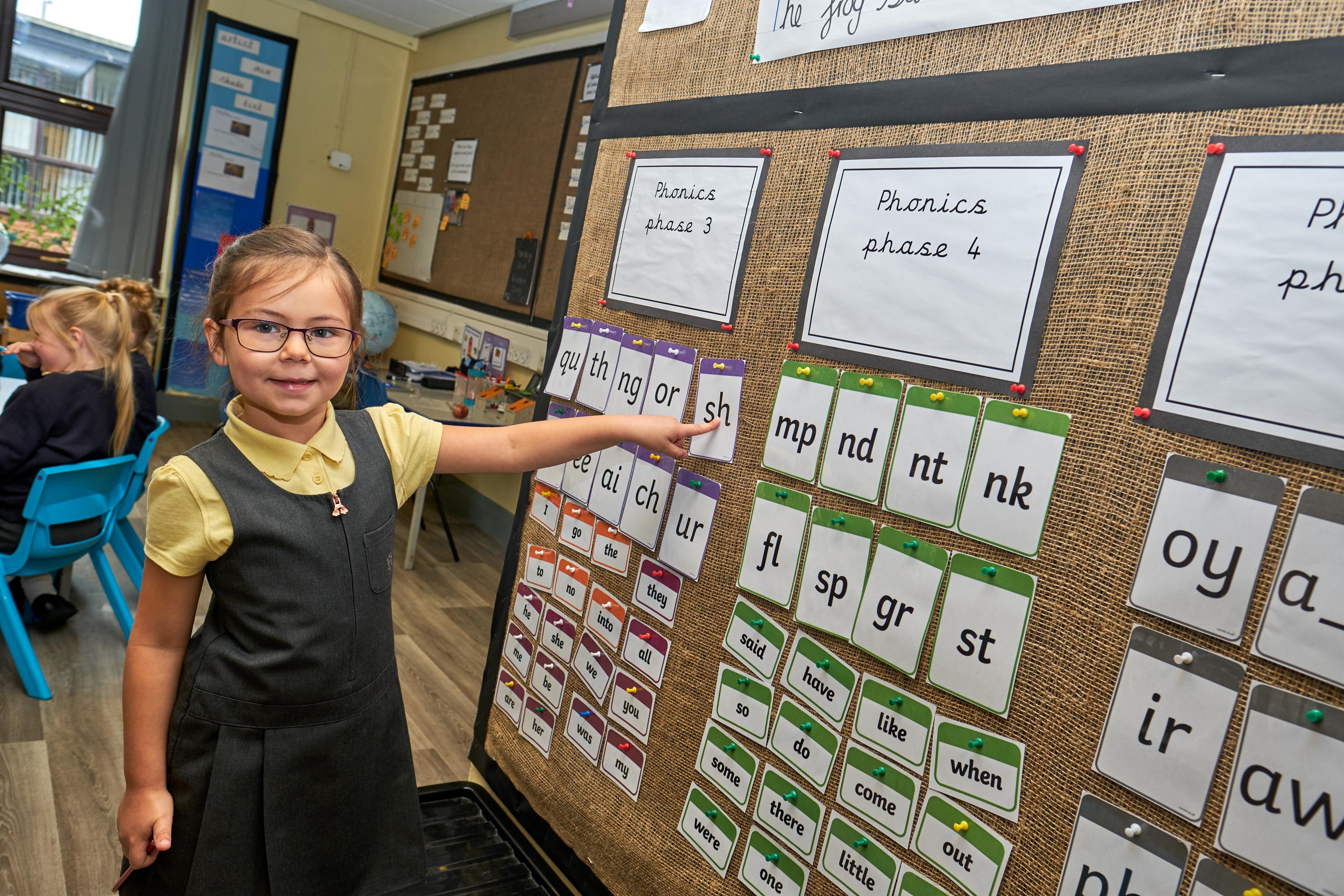
Phonics and Reading
All children in EYFS and Year 1 have daily phonics lessons. Pupils are taught in phonics phase groups each morning for a period of approximately 20 minutes. The groups are reviewed regularly to ensure all children are working at the appropriate phase.
We utilise the Lancashire Red Rose Phonics Programme for children entering our EYFS and as they progress through Year 1 to support the delivery of phonics lessons. In Year 2 and Key Stage 2, where children receive additional phonics support, interventions follow the same systematic synthetic programme. The Red Rose Bounce Back Phonics and Red Rose Fast Track Phonics intervention schemes are utilised to support the intervention delivery.
Staff tailor lessons to meet the requirements of the groups of children they are working with so that all children are able to make the best progress possible. This may mean that sometimes mnemonics are used to support children's acquisition and understanding of sounds.
There are six phases within the Letters and Sounds programme:
- Phase 1 – Activities are divided into seven aspects: Environmental Sounds, Instrumental Sounds, Body Sounds, Rhythm and Rhyme, Alliteration, Voice Sounds and finally Oral Blending and Segmenting.
- Phase 2 – Learning 19 letters of the alphabet and one sound for each. Blending sounds together to make words. Segmenting sounds into their separate sounds. Beginning to read simple captions.
- Phase 3 – The remaining 7 letters of the alphabet, one sound for each. Graphemes such as "ch", "oo" and "th" representing the remaining phonemes not covered by single letters. Reading captions, sentences and questions. On completion of this phase, children will have learnt the "simple code", i.e. one grapheme for each phoneme in the English language.
- Phase 4 – No new grapheme-phoneme correspondences are taught in this phase. Children learn to blend and segment longer words with adjacent consonants, e.g. swim, clap, jump.
- Phase 5 – Now we move on to the "complex code". Children learn more graphemes for the phonemes which they already know, plus different ways of pronouncing the graphemes they already know.
- Phase 6 – Children then move on to No Nonsense Spelling.
To support the teaching of letter formation during phonics, a consistent patter is used. The patter we use as a school is the Red Rose patter.
Reading is an integral part of everything we do at Thornton Primary School. Our aim is for all children to become fluent, confident readers who read for pleasure and develop a lifelong love of books.
In Reception and Year 1, guided reading is delivered through a carousel approach. Throughout the week, children rotate through a range of carefully planned reading activities designed to develop decoding, fluency, comprehension and discussion skills. These activities provide opportunities for children to read with an adult, work collaboratively with their peers and engage independently with high-quality texts.
In Years 2 to 6, guided reading follows Fred's Teaching approach, enabling children to continue developing key reading skills through structured and engaging lessons. Children are taught to decode unfamiliar vocabulary, build fluency and deepen their understanding of texts through discussion, prediction, retrieval, vocabulary exploration and summarising.
Targeted reading interventions take place daily for children who need additional support, ensuring that every child can make strong progress. Additional phonics interventions are also provided for Key Stage 2 pupils who continue to require them.
Home reading books are initially phonics-based when a child is at the earlier stages of acquiring reading knowledge and skills. All phonics reading books sent home are linked to the phase and sounds that a child has been learning in phonics lessons. This allows parents and carers to support reading at home and reinforce learning from school. The majority of our home reading books are Collins Big Cat texts; these high-quality books help children make excellent progress in reading.
Supporting your child by reading to them, and with them, as regularly as possible at home makes a significant difference to their attainment and progress, not only in reading but across the curriculum.
Our school library is currently being transformed into an exciting outdoor reading space where children will have access to a wide range of high-quality books and texts. This area will continue to be managed by our dedicated Reading Champions, who take great care and pride in maintaining the library and inspiring others through their enthusiasm for reading. They play an important role in promoting a reading culture across the school, regularly sharing their passion for books with younger children and their peers.
After lunch each day, all children enjoy listening to a class novel. These carefully selected texts inspire children, develop their vocabulary and comprehension skills, and nurture a genuine love of reading. Sharing high-quality stories together provides valuable opportunities for discussion and helps foster a lifelong enjoyment of books.
- 7_Top_Tips_to_Support_Reading_at_Home.pdfPDF File
- Year-2-Autumn-1-Medium-Term-Planning-1xkenq.pdfPDF File
- Year-3-Autumn-1-Medium-Term-Planning-k2x2um.pdfPDF File
- Year-4-Autumn-1-Medium-Term-Planning-bjr9ej.pdfPDF File
- Year-5-Autumn-1-Medium-Term-Planning-vpbx7r.pdfPDF File
- Year-6-Autumn-1-Medium-Term-Planning-rel24d.pdfPDF File