Thornton Primary School Love • Respect • Ambition
Science Curriculum Overview
Intention
At Thornton Primary School, we recognise the importance of Science in everyday life. As one of the core subjects, we aim to give Science the prominence it requires.
Learning in Science prioritises the increasing of children’s knowledge and understanding of the world. Scientific skills and concepts are developed through a process of enquiry and observation. We aim to develop the natural curiosity of our children, the confidence to question a process or theory, a respect for living organisms and the environment. We also provide opportunities for the children to critically evaluate the evidence presented to them or gathered through their own enquiries.
Implementation
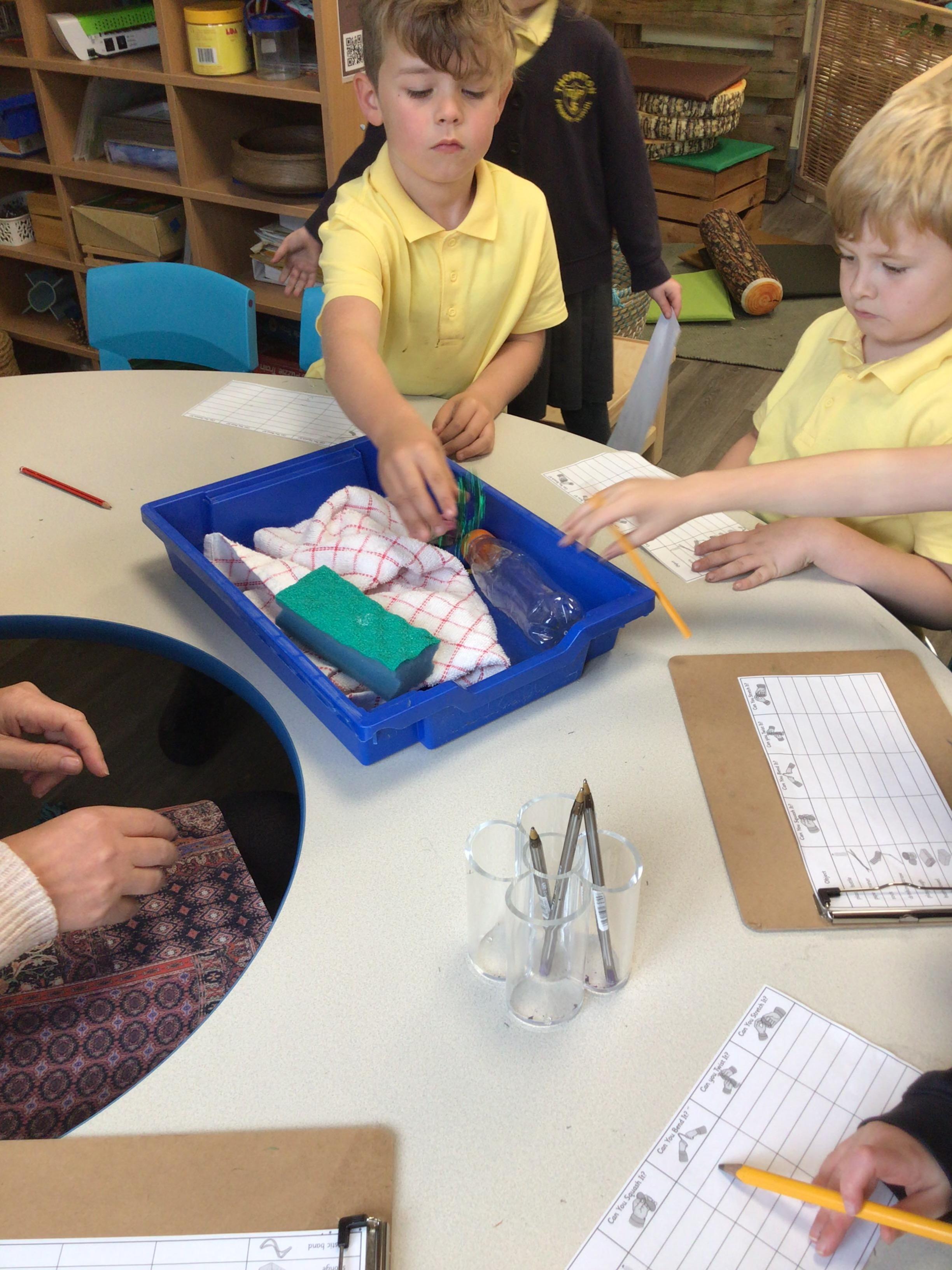
Science is taught utilising the Pearson’s Science Bug scheme and following our whole school overview. The units are designed to provide a breadth of study across the three scientific fields in a way that will engage, excite and enthuse the children. A different Science unit is taught every half-term, with lots of opportunities for practical activities.
Within the Forest School sessions at Thornton Primary School, the children are provided with the unique opportunity to experience Science in action. This can be through both specific activities and incidental observations or experiences. As such, this allows our children to investigate scientific theories, pose questions in the context of a situation and highlights the role science has in our everyday lives.
A Curriculum for All
We support our children with SEND by adapting learning where this is appropriate. A range of equipment is available for investigations and methods of recording are adapted to support children with a range of needs, if required. Key vocabulary is converted using Widget to ensure our children have better opportunities to acquire subject-specific vocabulary.
Learning Connections
Science touches every part of life and as such, can connect with other areas of the curriculum. Many aspects of data handling and measuring in mathematics are used when completing investigations. Specific subject knowledge can also be linked across the curriculum. For example, reversible and irreversible changes. This can relate to cookery in DT, deforestation in Geography and the sharing of information online in Computing.
Vocabulary
Being able to use and apply scientific vocabulary, enables the children to better understand the subject, the topic content and communicate their ideas accurately with others. Each unit from Pearson’s Science Bug has a key vocabulary list that is topic specific.
Impact
Assessment
We monitor the impact of learning each lesson through teacher observations and questioning. The Science Bug scheme provides an end of unit assessment or quiz for each topic. Using these methods, we can track the progress made across school and monitor their knowledge retention.
The expected impact of the Science curriculum is that children will:
- Develop scientific knowledge and understanding of concepts, answering scientific questions about the world around them through different types of enquiries.
- Develop and use a range of skills including observations, planning and carrying out investigations.
- To evoke an enthusiasm and enjoyment for scientific learning and discovery, creating independent learners who are eager to explore scientific questions.
- Be equipped with the knowledge needed to understand the breadth of science, through both its uses and the implications of it, today and in the future.
- Use a range of methods to communicate their scientific findings and present them, including written explanations, ICT, diagrams, graphs and charts. These latter methods allow the children to apply their mathematical skills in the areas of measure and data handling.
- Meet the end of key stage expectations outlined in the National Curriculum for Science.